

From Vietnam to Wageningen: Young Innovators Reimagine Food Systems through Nature-Based Solutions
What started in April 2025 with an online Nature-Based Solutions in Food Systems Hackathon for Vietnamese students, co-organized by Empower Youth4Food and We Are Changemakers has grown into a global platform for youth-led transformation through the Food Systems Innovation Challenge – Nature-based Solutions Edition, organized by Netherlands Food Partnership and Wageningen University & Research.
From local ideas to global impact
Back in April, a jury panel consisting of Bram de Groote (Sustainable Food Systems Advisor, WUR), Nguyen Huong Lan (Senior Agriculture Policy Advisor at the Dutch Embassy in Vietnam) and Marjan de Jong (Fellow at We Are Changemakers) selected team EcoShrimp from Can Tho University and team EarthFeast from Tra Vinh University as the winners of the hackathon with their innovative Nature-Based Solution for a more environmental, and socio-economic friendly food system in Vietnam.
A vital feature of the hackathon was it case-study based approach, with real-world challenges provided by private sector partners including Rijk Zwaan, Good Tôm and Agriterra. This approach ensured that the students worked on locally relevant problems, connecting academic knowledge with on-the-ground realities faced by farmers and rural entrepreneurs, while building a network with industry professionals.
“We submitted a case study to highlight the challenges associated with the traditional rice-shrimp farming practices. We believe that young people, with their creative minds, risk-taker mindset, and up-to-date knowledge, can offer fresh solutions for the farmers (whom can be their parents/ families).
In return, on the field, farmers can share with the students their practical experience on climate adaptability.”
— Le Thi Thu Hien, Senior Cooperative Advisor at Agriterra


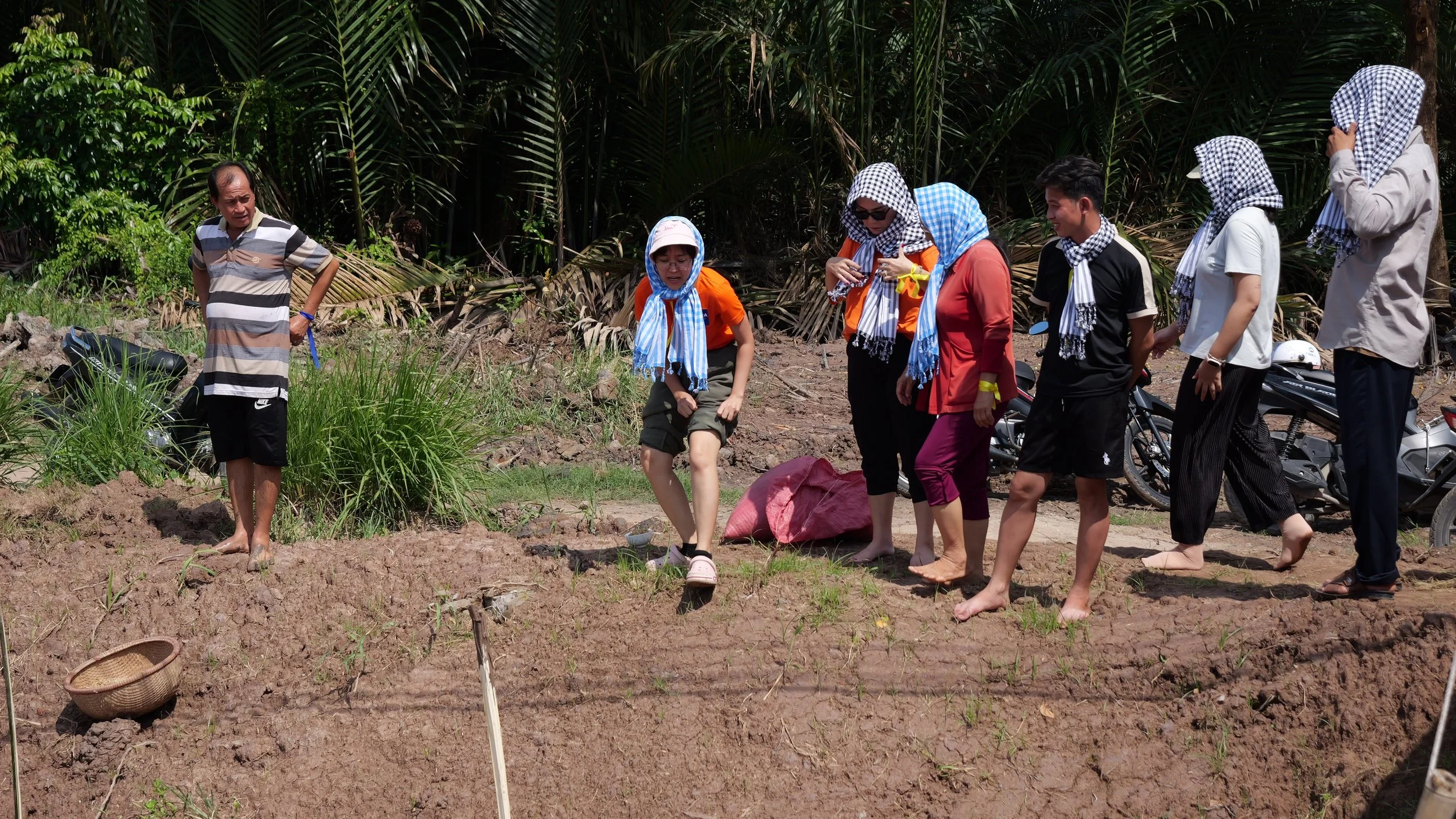
"One Day to be a Farmer". By stepping into the rice fields and working like real farmers, the students gained practical knowledge about rice cultivation, and at the same time appreciated the effort put into each grain of rice.
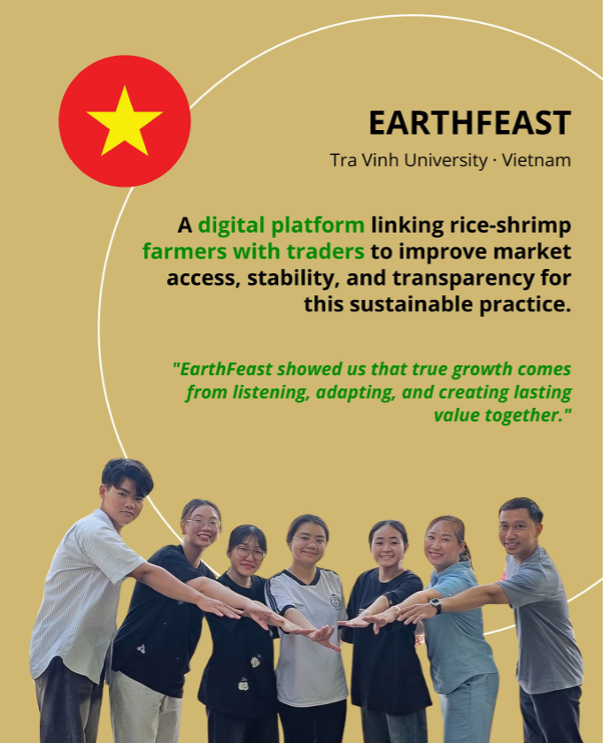
EarthFeast
Empowering farmers through digital and community innovation
Committed to promoting nature-friendly agriculture, EarthFeast partnered with Chau Hung Cooperative and Agriterra to strengthen the organic rice–shrimp model on Long Hoa Island, Vinh Long province. Their project integrates digital tools, community training, and ecotourism to empower farmers, improve market access, and raise awareness of sustainable food production.
Their approach is centered around two main pillars:
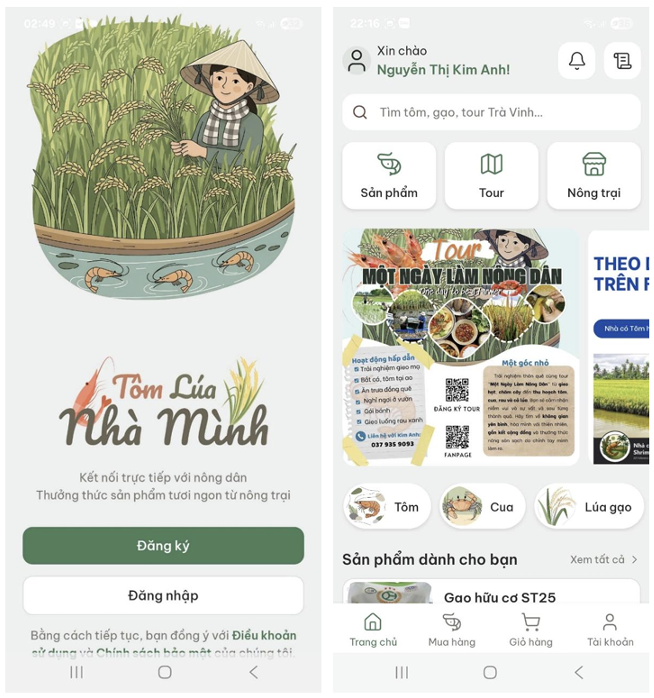
1 - Digital innovation through the development and piloting of the “Tôm - Lúa Nhà Mình” (“Our Rice-Shrimp”) application.
2 - Community engagement and ecotourism through the launch of the “One Day to be a Farmer” experience program, allowing visitors to learn about organic rice–shrimp farming and local traditions.
With EUR 1000 seed funding provided by the Dutch Embassy in Vietnam, EarthFeast implemented a series of impactful activities between May and September 2025:
-
Conducted an initial survey with 52 local farmers in Long Hoa to understand their needs, challenges and expectations.
Collected farmers’ stories and insights on the rice-shrimp model to inform app design and ecotourism activities.
-
Developed and piloted the “Tôm – Lúa Nhà Mình” application with farmers, incorporating their feedback for improvement.
Organized a training session for farmers in Long Hoa to introduce and install the application. Farmers were guided to test core features: product listing, market price updates and order management.
-
Gathered feedback and practical suggestions from farmers to improve usability and adapt to local needs.
Introduced the app to consumers to build two-way trust and awareness, including demonstrating core features such as product listings, price updates and direct ordering.
Organized a training session with 25 farmers to raise awareness of sustainable farming practices and the economic potential of the rice-shrimp model.
Organized a “One Day to be a Farmer” activity for buyers, students and local communities to pilot the ecotourism experience (sowing rice, catching shrimp, cooking local dishes, making traditional cakes).
Trained local farmers and youth as community tour guides, building ownership and skills among local people.
-
This picture illustrates the interface of our “Tôm – Lúa Nhà Mình” application. The app was designed to be user-friendly and accessible for farmers in Long Hòa, even those with limited digital literacy. It provides key features such as direct farmer-to-consumer connection, market information updates, and storytelling from “farm to table.”
-
Held on September 11, the event was jointly organized by EarthFeast, Tra Vinh University, Agriterra, Châu Hưng Cooperative, the Cooperative Alliance, and the farmers of Long Hòa commune. It offered participants an immersive experience – from transplanting rice seedlings, wading in the fields, to catching fish and shrimp in the ponds.
This deepened understanding of the organic rice–shrimp model: a smart agricultural solution that works in harmony with nature and ensures resilience in the face of climate change in Mekong Delta.
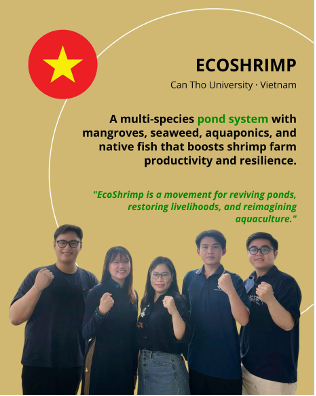
Ecoshrimp
Team Ecoshrimp project focused on one of the key challenges in the Vietnamese shrimp farming industry: underutilized water treatment ponds. These ponds, which are essential for maintaining clean water, are often left idle, resulting in a significant waste of resources. According to our survey during field visits, approximately 8 hectares of “supporting ponds” per one shrimp farm are left unused. This issue is particularly prevalent in areas with extensive shrimp farming, especially in Bac Lieu and Ca Mau provinces — the two largest shrimp producing regions in Vietnam. Despite their vital role in shrimp production, many farmers and companies, including “ case owner” Good Tôm, in these areas struggle with the inefficient management of these critical resources.
To address these challenges, the Ecoshrimp team has developed the Integrated Multi-Trophic Aquaculture (IMTA) model, a nature-based solution designed to transform idle treatment ponds into productive and sustainable ecosystems. This innovative model utilizes native species, requiring minimal financial and technical investment, while providing a natural water filtration system that significantly reduces pollutants. As a result, farmers can lower water treatment costs and generate additional income through the sale of these species.
The IMTA model integrates multiple species, each playing a functional role:
• Mangroves (Avicennia officinalis): Stabilize soil, enhance biodiversity, reduce nitrogen, phosphorus, and capture carbon. (Do & Thuy, 2020; Press Metal Aluminium Holdings Berhad, 2023)
• Seaweed (Gracilaria): Absorbs excess nitrogen, phosphorus, and ammonia, improving water quality. (Trianti & Adharini, 2020; Chopin et al., 2004)
• Spotted Scat Fish (Scatophagus argus): Profitable species, consumes organic detritus, reducing suspended solids. (Vietnam Fisheries Magazine, 2022; Manh & Minh, 2012)
• Tilapia (Oreochromis niloticus): Utilizes organic waste, further improving water quality and providing additional protein sources. (Hong & Huy, 2024)
With EUR 1,000 seed funding from the Dutch Embassy in Vietnam, EcoShrimp implemented a series of impactful activities between May and September 2025:
-
Conducted field research and interviews to identify core problems and causes.
Researched and developed the IMTA model as an innovative solution.
Procured materials and developed a tangible IMTA model to visualize the concept for stakeholders.
-
Launched their social media platform (@Eco.shrimp on Instagram).
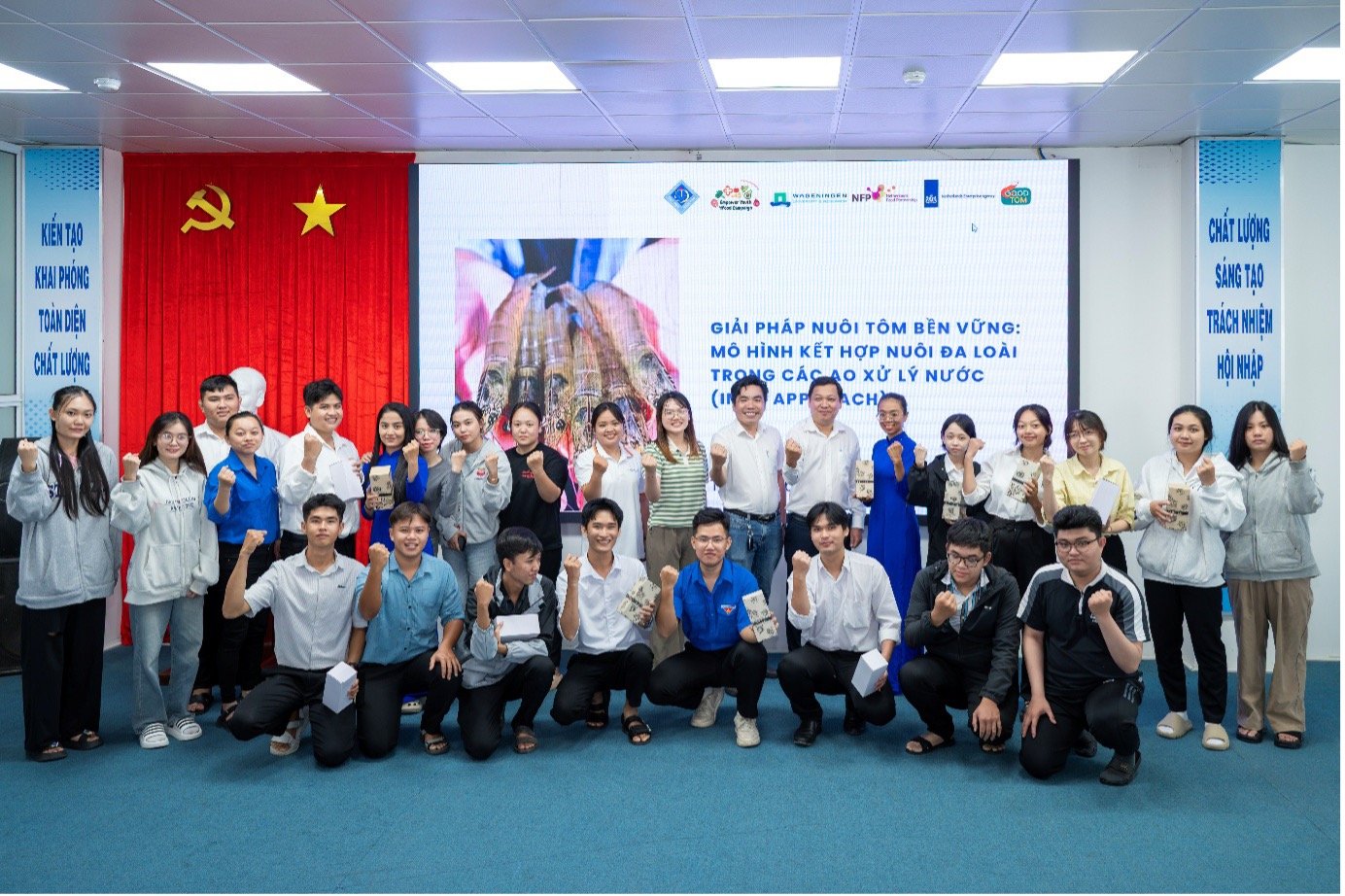
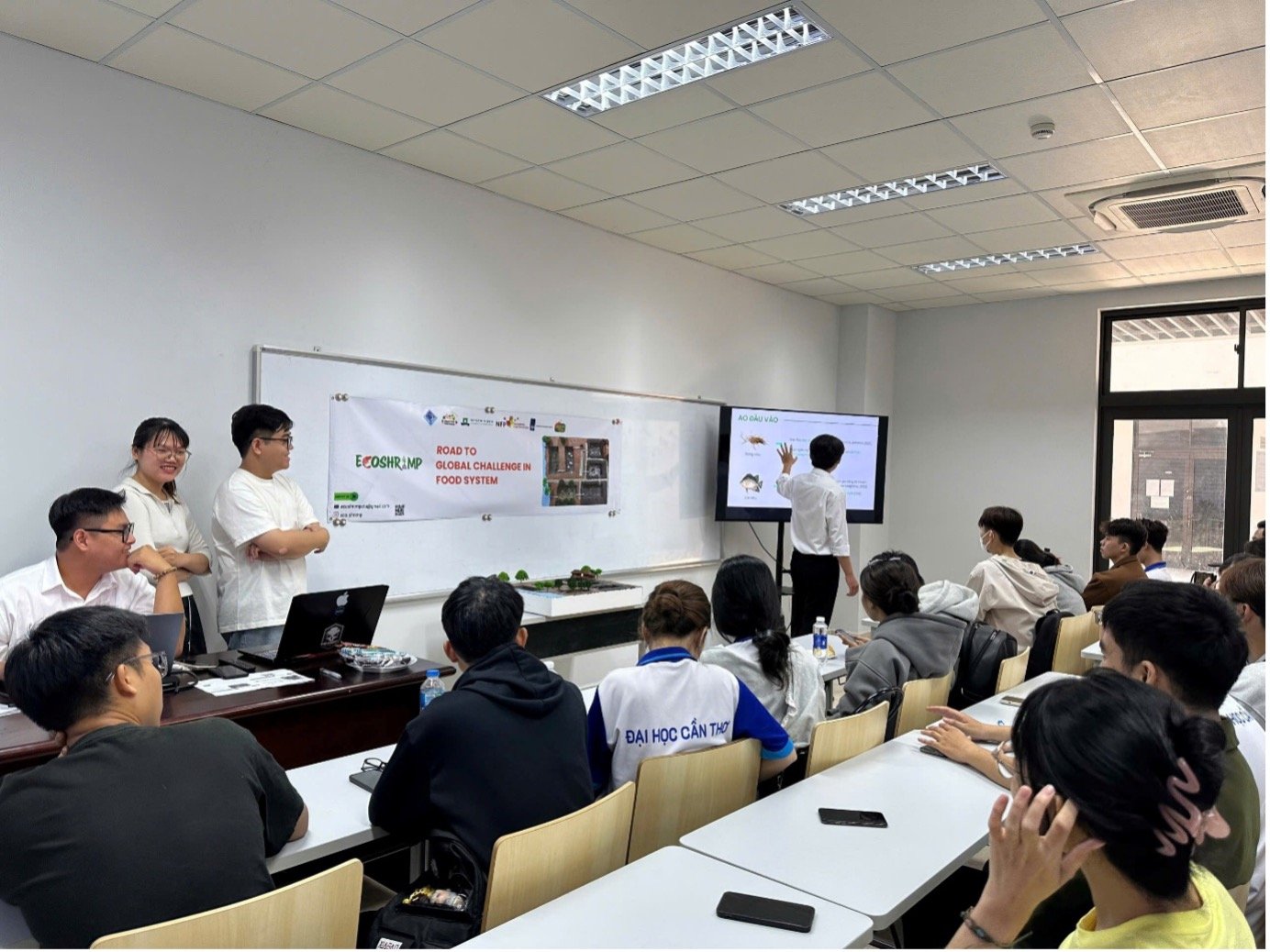
Organized one workshop at Can Tho University and one workshop at Bac Lieu University involving over 60 students in total. The aim of these workshops was to introduce the IMTA model and its social-, economic and environmental benefits; 97% of the students expressed willingness to introduce the Ecoshrimp solutions to their (farming) families.
Conducted 3 farmer workshops in Bac Lieu, with 34 farmers and 1 shrimp company engaged: 88.57% of participants acknowledged the feasibility of the Ecoshrimp model, and 77% of the participants expressed willingness to pilot IMTA in the future.
-
![]()
Student workshop at Bac Lieu University
Student workshop at Bac Lieu University with the aim of raising awareness among young people about sustainable aquaculture and the Ecoshrimp IMTA model
-
![]()
Student workshop at Can Tho University
Student workshop at Can Tho University, organized by EcoShrimp with the aim of waising awareness among young people about sustainable aquaculture and the Ecoshrimp IMTA model

Food Systems Innovation Challenge
Grand Finale
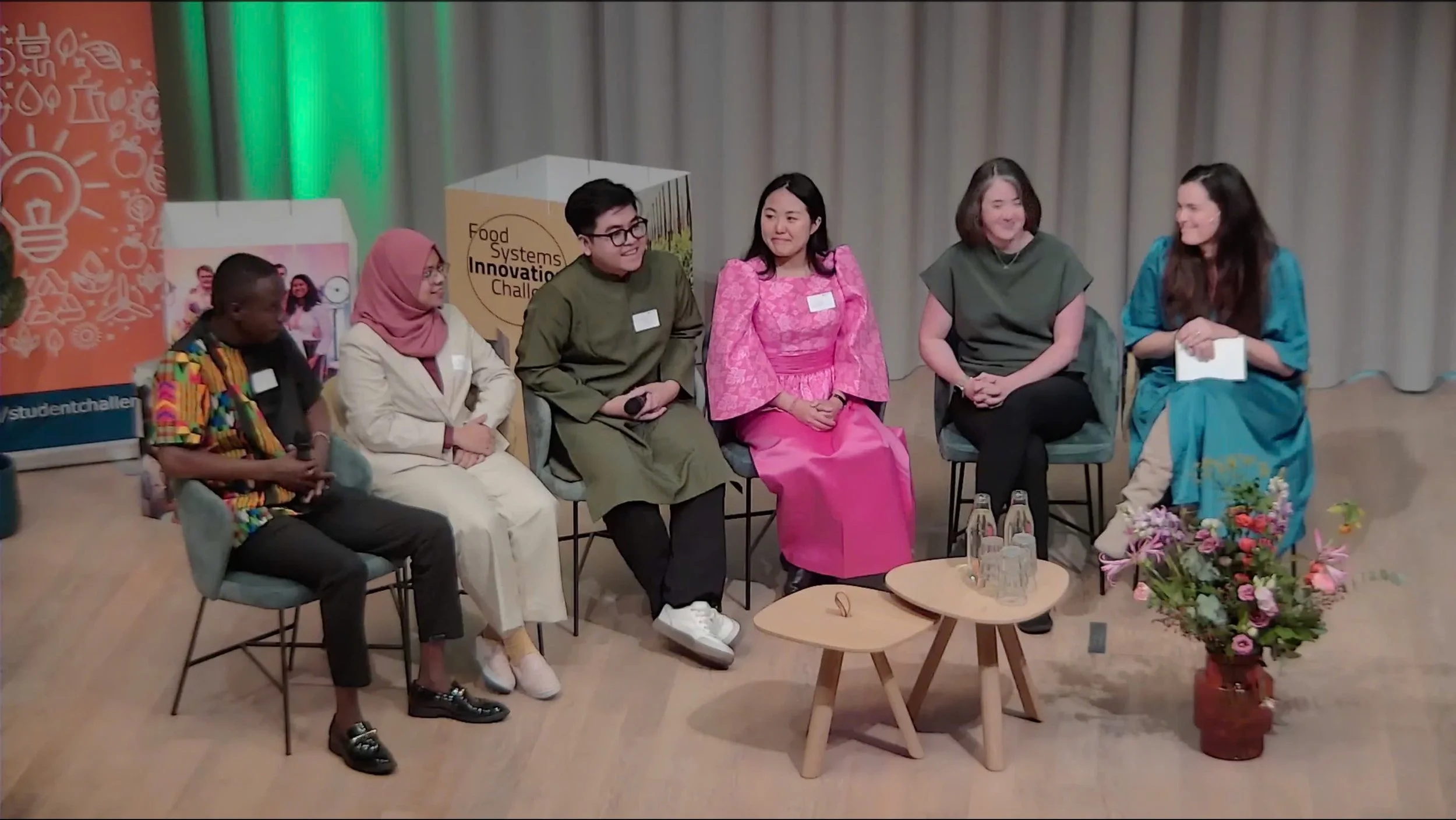
On 30 September 2025, EcoShrimp and EarthFeast’s journey reached its grand finale at Wageningen University & Research (WUR) in the Netherlands where they met with other university students from the Global South who also spent months of ideating, testing, and refining their concepts for a food system that works with nature, not against it.
The finals featured lively panel discussions on youth leadership and innovation in food systems transformation. Meanwhile, student teams pitched their ideas to an international jury, answering tough questions about feasibility, inclusivity, and long-term impact.
Watch EcoShrimp’s pitch delivered by Lu Nguyen Thanh Hieu from 15:53 and EarthFeast’s pitch delivered by Nguyen Thi Kim Anh from 1:23:35 (Link: WUR-EVENT Exploring the Future of Food and Farming)
Although the two teams from Vietnam did not succeed to progress to the next phase, which is an entry to the Youth Food Lab, an international incubation programme led by the World Food Forum in partnership with Wageningen University & Research and International Association for Agricultural Sustainability (IAAS), the students and their lecturers have become part of a global movement.
Over 24 teams from 13 universities across 12 countries and 4 continents are now connected, collaborate, and co-create solutions rooted in nature and community.
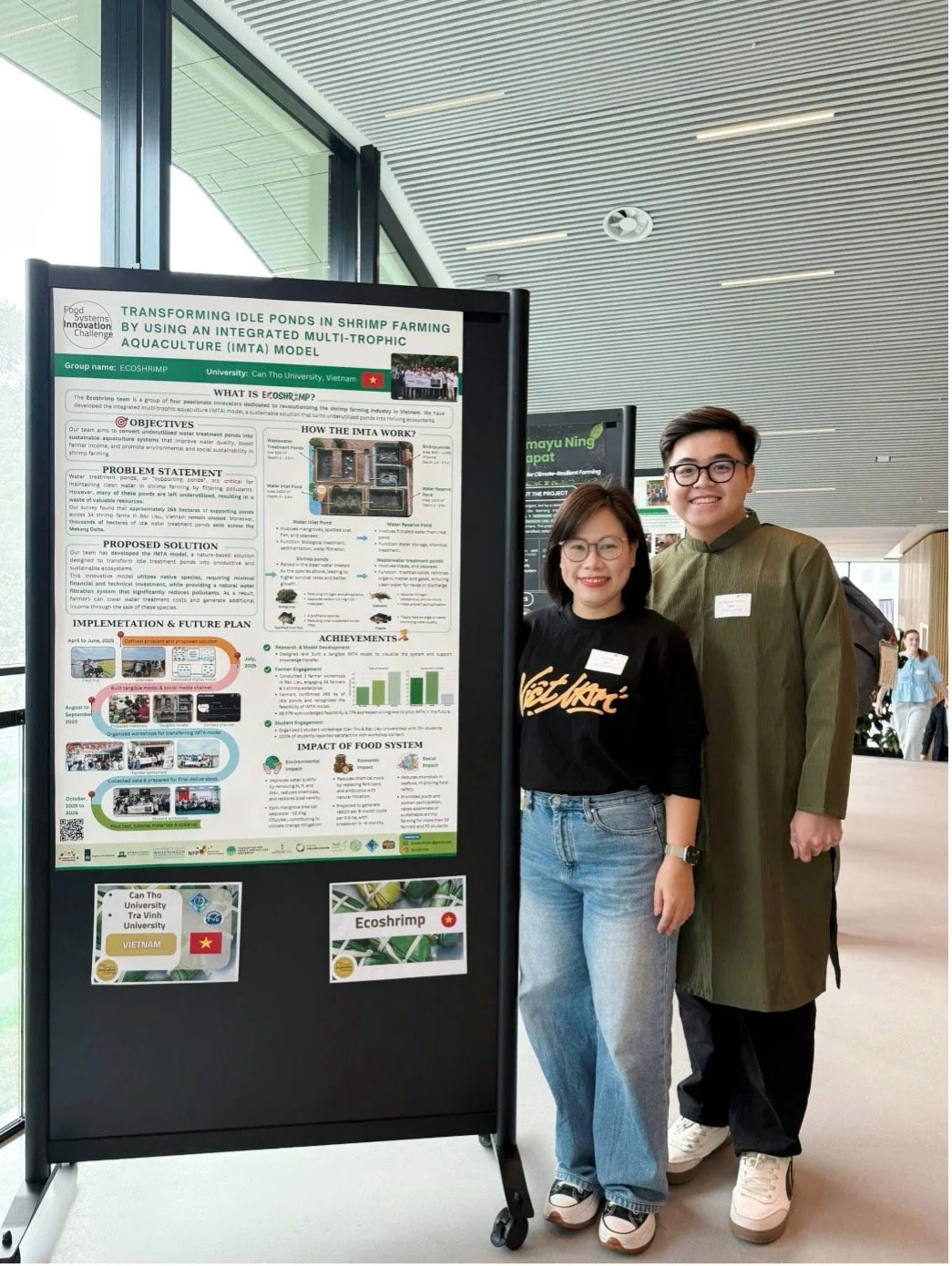
EcoShrimp
Ho Hong Lien and Lu Nguyen Thanh Hieu from Can Tho University, representing EcoShrimp in Wageningen
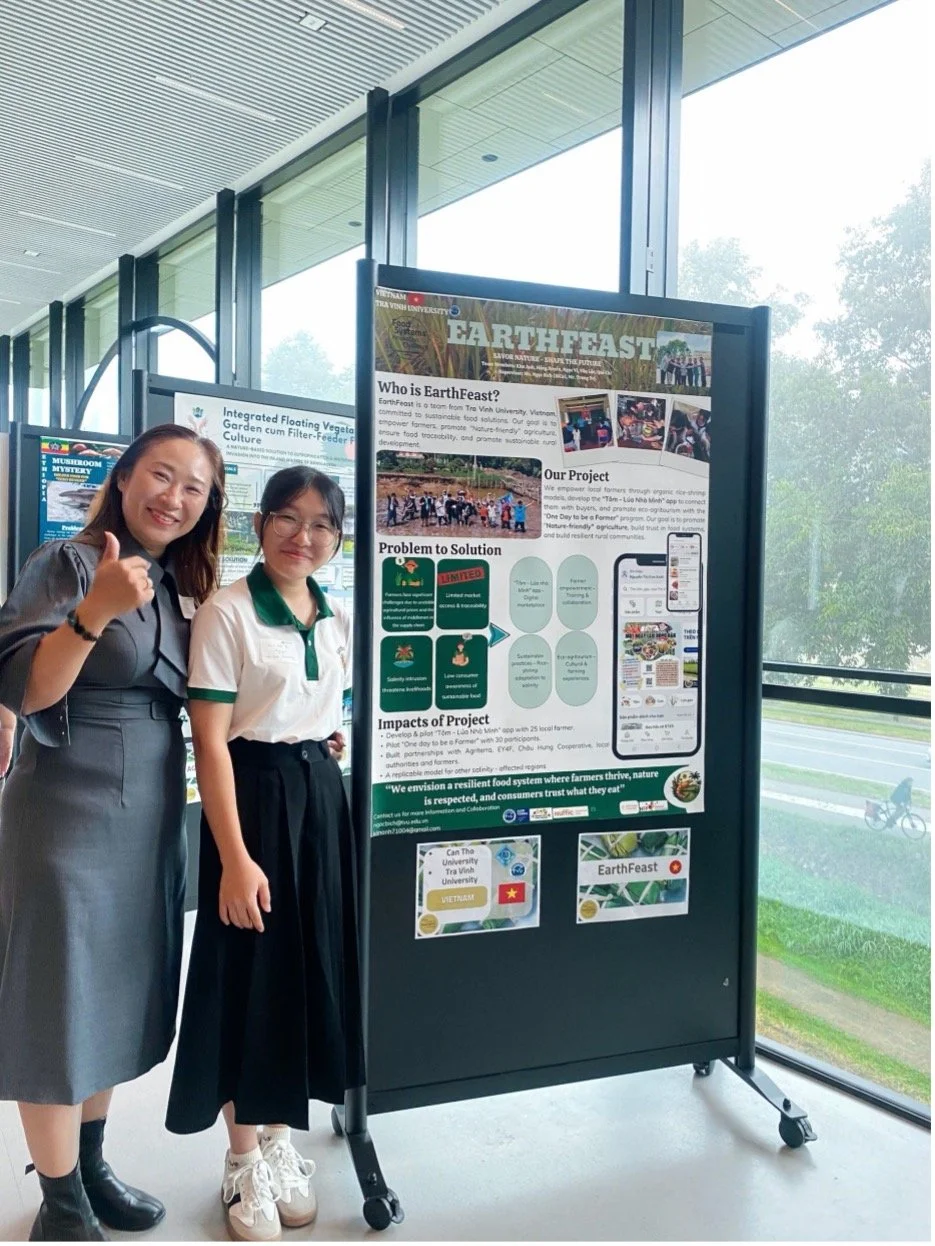
EarthFeast
Tran Thi Ngoc Bich and Nguyen Thi Kim Anh from Tra Vinh University, representing EarthFeast in Wageningen
“Thanks to the opportunity that the Changemaker Challenge brings to Can Tho University and CTU students, it is really a nice stepping stone for them to grow into a new role - a changemaker for global challenges. By combining different fields of knowledge, nature-based challenged approaches and new leadership skills, Can Tho University and CTU students hope to make a significant contribution to the transformation of the food system.”
— Ho Hong Lien, Coordinator of team EcoShrimp
The journey would not have been possible without the support of our partners.
-
Dutch Embassy in Vietnam
-
Wageningen University & Research
-
Netherlands Food Partnership (NFP)
-
We Are Changemakers
-
Netherlands Enterprise Agency (RVO)
-
Good Tôm
-
Rijk Zwaan
-
Agriterra
-
Tra Vinh University
-
Can Tho University